
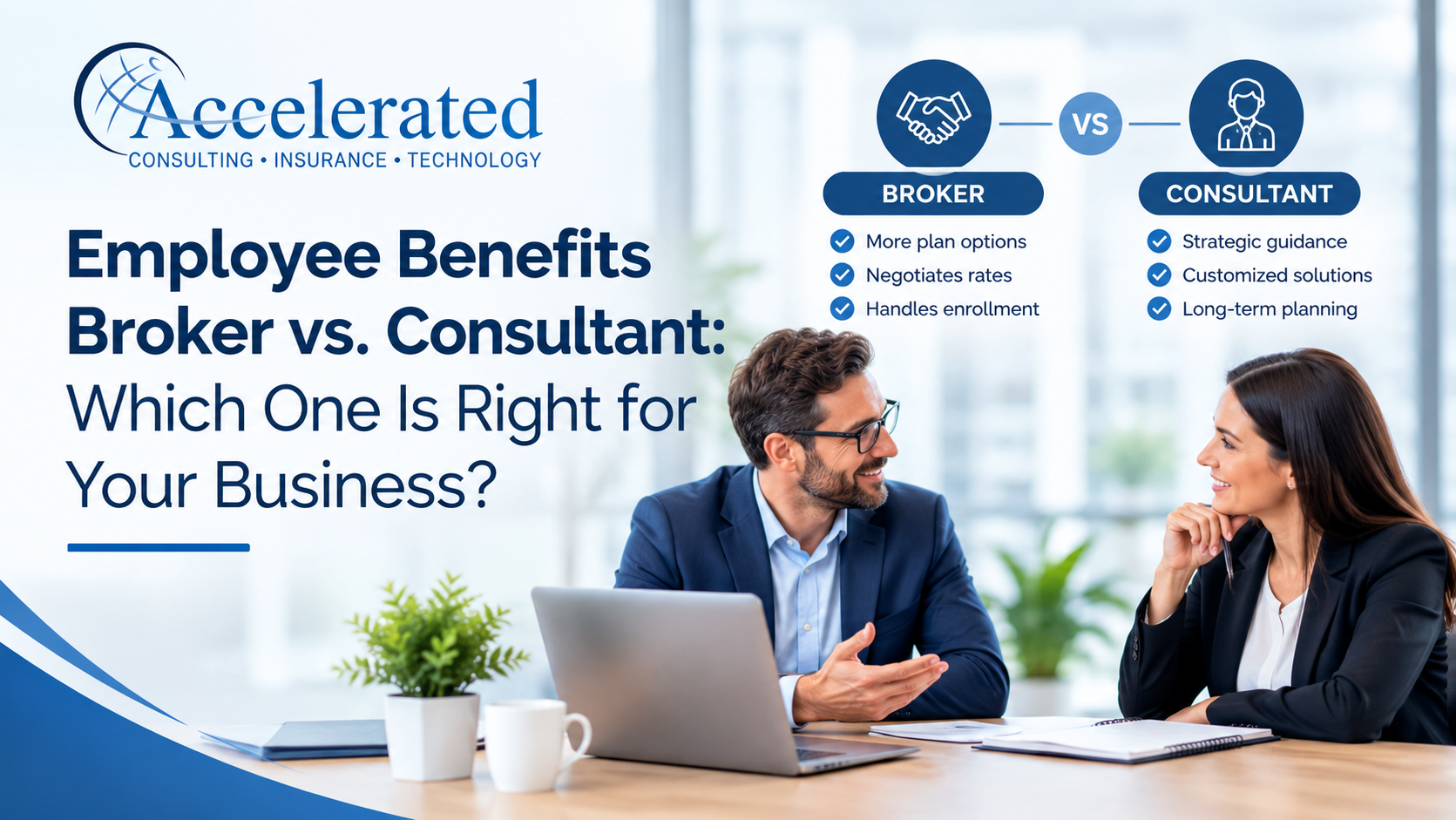
If you’ve ever sat through a renewal meeting wondering whether the person across the table is truly on your side or just trying to close a sale, you’re not alone. Employers hear the terms “broker” and “consultant” tossed around constantly, often as if they mean the same thing. They don’t. Understanding the difference between an employee benefits broker and a benefits consultant can change how you approach your entire employee benefits strategy, not just the plan you pick this year.
The wrong fit can leave you with a plan that technically works but never quite serves your team or your budget the way it should. The right fit can turn your benefits program into a real advantage for hiring and retention. Let’s break down what each role actually does, so you can decide which one your business needs.
What Is an Employee Benefits Broker?
An employee benefits broker is licensed to sell insurance products and typically works with a handful of carriers to find group health insurance and other benefits that fit your company. Think of a broker as your connection point to the insurance marketplace.
Brokers help employers:
- Compare available group health insurance and ancillary benefit plans
- Negotiate rates and terms with insurance carriers
- Manage the annual renewal process
- Handle enrollment logistics and plan implementation
A good broker knows the carrier landscape well and can usually find you a workable option fairly quickly. Much of their compensation comes from commissions tied to the plans they place, so their primary lane is plan procurement rather than long-term strategy. That’s not a knock against brokers. For a smaller company with a fairly straightforward benefits package, a broker relationship can check every box.
What Is an Employee Benefits Consultant?
A benefits consultant takes a wider view. Instead of starting with “which plan should we buy,” a consultant starts with “what should our benefits strategy actually accomplish.” That might sound like a subtle difference, but it changes the entire conversation.
Consultants typically focus on:
- Benefits strategy and long-term plan design
- Cost management across your entire benefits program, not just premiums
- Understanding what your workforce actually values and needs
- Aligning benefits decisions with your broader business goals
- Ongoing analysis rather than a once-a-year check-in
Consulting work often goes well beyond selecting an insurance plan. A consultant might help you model multi-year cost projections, evaluate self-funding options, restructure your benefits tiers, or figure out how to offer more without blowing up your budget. It’s a more analytical, advisory relationship that tends to pay off most for employers dealing with rising benefits costs, growing headcount, or a program that has become more complicated than it needs to be.
Employee Benefits Broker vs. Consultant: Key Differences
Here’s the comparison in plain terms:
Primary focus: Brokers focus on placing a plan. Consultants focus on building a strategy.
Plan selection: Brokers typically work within a set of carrier relationships. Consultants often take a broader, more objective look at your options.
Carrier relationships: Brokers are usually compensated through carrier commissions. Consultants may work on a fee basis, which can reduce potential conflicts of interest.
Cost management: Brokers negotiate pricing at renewal. Consultants look at cost drivers year-round, including claims trends and plan design choices.
Benefits strategy: Brokers generally react to what’s available in the market. Consultants proactively shape what your program should look like.
Long-term planning: Brokers tend to operate on an annual cycle. Consultants think in multi-year horizons.
Employer support: Brokers provide support around enrollment and renewals. Consultants provide ongoing strategic guidance throughout the year.
Neither approach is inherently better. They’re built for different needs.
Which One Does Your Business Need?
The right answer depends on your goals, your company’s size, how complex your benefits program is, and how much support you want throughout the year.
If you’re a small business with a simple health plan and modest ancillary offerings, a broker may be all you need. You get access to competitive options, help with renewals, and a straightforward path to coverage.
If you’re managing a growing team, facing rising benefits costs, or trying to build a more competitive employee benefits program to attract talent, a consultant-led approach usually offers more value. So does a company juggling multiple locations or a leadership team that wants benefits tied more closely to overall business strategy. Some employers benefit from a blend of both, using broker services for placement while relying on consulting support for strategy and cost control.
How Accelerated Can Help
This is where Accelerated fits in. Rather than simply pointing you toward a plan, our team works with employers to evaluate group health insurance strategy and build a benefits program designed around your actual workforce and budget.
We help businesses:
- Compare benefits options with a clear, unbiased view
- Evaluate group health insurance strategies that fit their goals
- Manage and control rising benefits costs
- Design stronger, more competitive benefits programs
- Make informed decisions backed by real analysis
- Align benefits with both business priorities and employee needs
Whether you’re exploring group insurance options for the first time or looking to round out your program with supplemental benefits, our approach centers on strategy first and product second. You can see the full scope of what we offer on our services page.
Final Thoughts
Choosing between an employee benefits broker and a consultant isn’t about picking the “correct” title. It’s about being honest with yourself about what your business actually needs right now, and where you want your benefits program to be a year or two from now. The goal was never just to purchase a plan. It’s to build a benefits strategy that genuinely works, for your company and for the people who show up to work there every day.
If you’re not sure which approach fits, that’s a completely reasonable place to start. Reach out to our team and we can walk through your current setup together.